Buying calls or puts can be a straightforward way to participate in a stock’s move without buying the shares outright. Here’s how to get started:
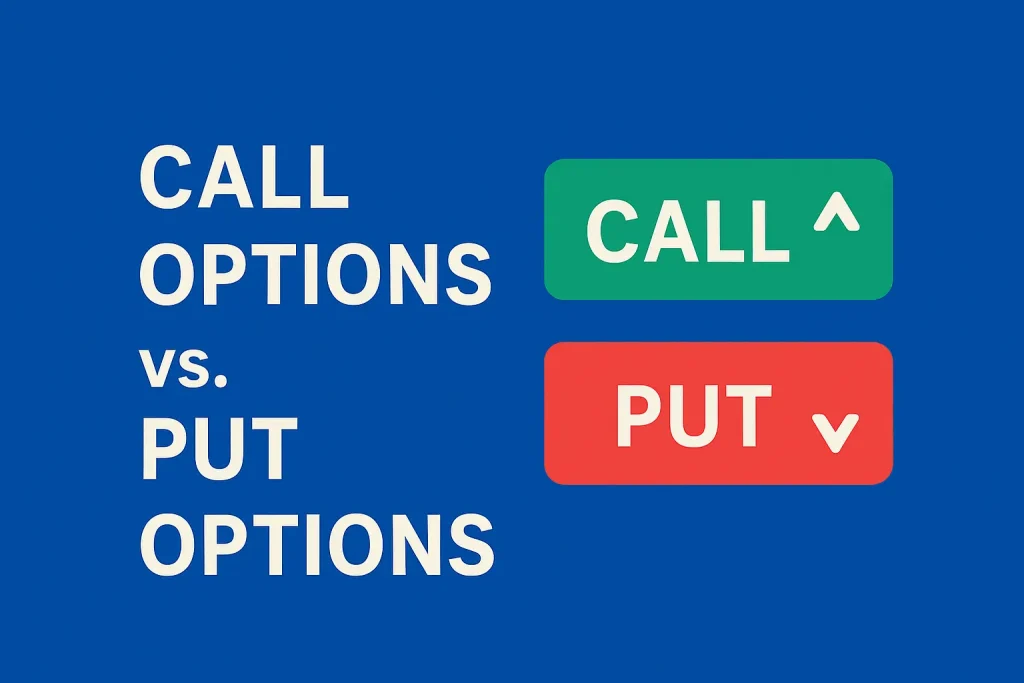
1. Understand Calls vs. Puts
- Call Option: Gives you the right to buy 100 shares at a specified strike before expiration. You profit if the stock moves above the strike + premium paid.
- Put Option: Gives you the right to sell 100 shares at a specified strike before expiration. You profit if the stock falls below the strike – premium paid.
2. Choose a Underlying Stock
Pick a stock you already follow. Look for clear catalysts (earnings, product launch) expected within your chosen time frame.
- Actionable Tip: For your first trade, avoid stocks with extreme volatility (e.g., biotech firms pre‐FDA results). Instead, pick well-known names like Apple or Microsoft, where price movements are more predictable.
3. Select Strike Price & Expiration
- Strike Price: Beginners often choose at-the-money (ATM) or slightly out-of-the-money (OTM) strikes. ATM options (strike near current price) have higher deltas and move more in sync with the stock. OTM options cost less but require a bigger stock move to become profitable.
- Expiration: For first-time buyers, select an expiration at least 30 days out. This gives time for the stock to move and reduces impact of time decay (theta).
- Actionable Tip: If you expect a move to materialize quickly (within a week), choose a weekly expiration but be aware time decay will be higher.
4. Calculate Maximum Risk & Reward
Your maximum loss is limited to the premium paid plus commissions/fees. Maximum gain on calls or puts is theoretically unlimited (calls) or limited to strike × 100 – premium (puts).
- Actionable Tip: If you pay $2.00 for a call contract, your potential loss is $200. Only risk what you can afford to lose. To estimate breakeven, add premium to strike (for calls) or subtract premium from strike (for puts).
5. Place the Order
- Market Order vs. Limit Order: Use a limit order to control cost. For example, if the ask is $2.20 and bid is $2.00, set a limit at $2.05 to avoid paying full ask.
- Order Types: Standard “Buy to Open” for calls or puts. Specify quantity (1 contract = 100 shares).
- Actionable Tip: Enter the limit, hit “preview,” check total cost, then submit. Confirm the order fills (you may need to adjust if liquidity is low).
6. Monitor and Exit
- Profit Target: Decide in advance if you’ll exit at a 50% gain (e.g., sell if $2 option hits $3) or hold until expiration.
- Stop Loss: Decide if you’ll cut losses at, say, a 30% drop (sell if $2 option falls to $1.40).
- Expiration Management: If the option is in-the-money near expiration, decide if you want to close or let it convert to shares (only if you’re comfortable owning stock).
- Actionable Tip: Set price alerts in your platform so you don’t miss a move.
By following these steps—understanding calls vs. puts, selecting a stock, choosing strikes/expirations, calculating risk/reward, placing disciplined orders, and managing positions—you’ll be well on your way to making your first options trade with confidence. Always review your trade afterward in a journal to learn and improve.
New to options? Get step-by-step alerts from a trusted service—check out our 2025 review: Best Options Alert Services 2025