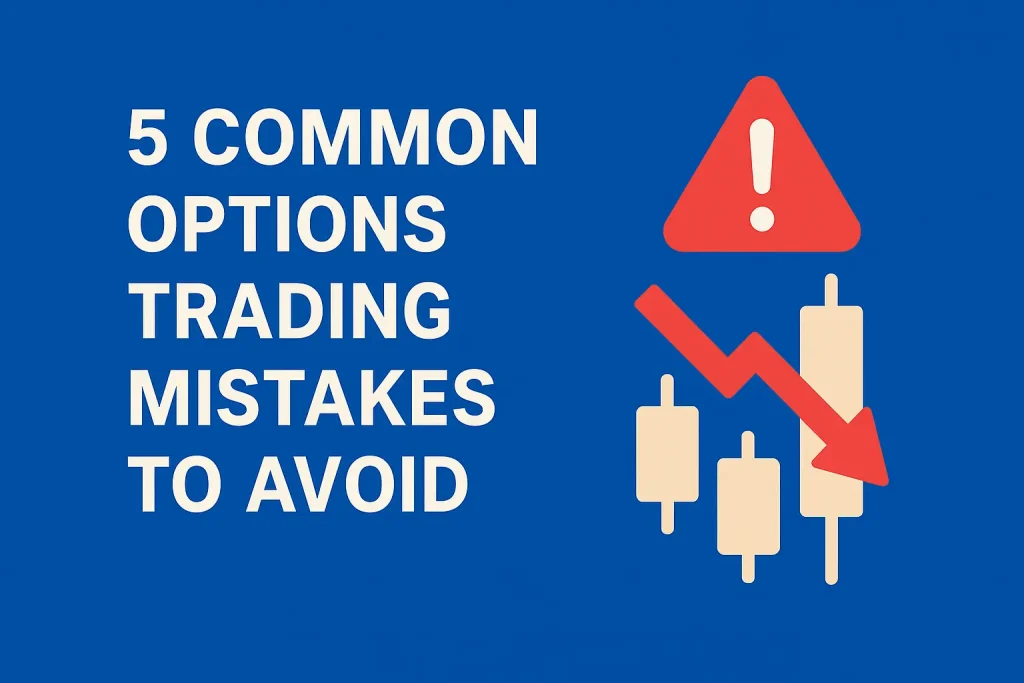
Options trading can offer superior leverage and flexible strategies, but it also carries unique risks. Here are five pitfalls to watch out for:
1. Ignoring Time Decay (Theta)
Time decay erodes an option’s value as expiration approaches. Many beginners buy options without understanding that even if the underlying stock moves in their favor, the option’s premium may still decline if time decay outpaces price gains.
- Actionable Tip: Check the “theta” value in your option chain. If theta is high (e.g., -0.10 or more per day), every day you hold loses that much value. Consider shorter holding periods or selling options rather than buying if interest rates rates.
2. Overleveraging a Small Account
A $1,000 account might be tempted to buy out‐of‐the‐money calls for big upside, but one or two losing trades can wipe out significant capital.
- Actionable Tip: Limit any single trade to 1–2% of account equity. For a $1,000 account, risking $10–$20 per trade will protect you from catastrophic losses while still allowing you to participate in high‐probability plays.
3. Skipping Risk Management
Options can swing wildly. Failing to set stop losses or position‐size properly can lead to a small price swing wiping out your entire premium.
- Actionable Tip: Determine your maximum acceptable loss per contract before entering. For example, if you pay $2.00 for a call, decide in advance that if it drops to $1.20 (40% loss), you’ll exit. Stick to that rule without emotion.
4. Chasing Every “Hot” Tip
Social media and chat rooms often tout “can’t miss” options setups. However, not every tip fits your strategy or risk profile. Blindly following every alert can quickly drain your account.
- Actionable Tip: Create a simple checklist: Does the trade align with your technical analysis? Are implied volatility and time to expiration reasonable? If it doesn’t meet your criteria, skip it—even if everyone else seems to be buying.
5. Misunderstanding Assignment Risk
Selling options (especially uncovered/naked calls) carries the risk of early assignment. If you sell a call without owning the underlying stock, a sudden price move can force you to buy shares at market price, leading to unexpected losses.
- Actionable Tip: If you’re selling short calls or puts, always have a plan for assignment. Either hedge with underlying positions or avoid naked options until you fully understand margin requirements and assignment mechanics.
By sidestepping these common mistakes—time decay ignorance, overleveraging, weak risk management, tip chasing, and assignment misunderstandings—you’ll build a more consistent, sustainable approach to options trading.